

Glass Terrace Enclosure Guide: Everything You Need to Know
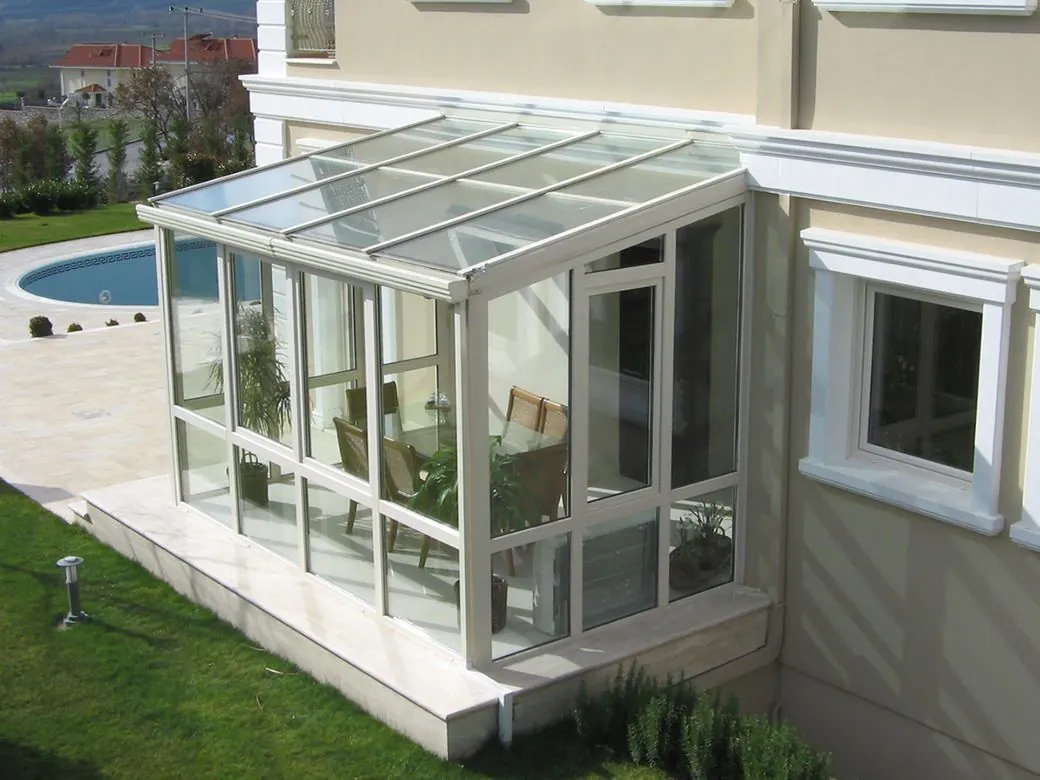
Enclosing a terrace with glass is the best way to gain additional living space without losing views or natural light. But not all enclosure systems are the same.
Types of glass enclosures
Frameless glass curtains (no vertical profiles)
Tempered glass panels that slide and fold without vertical profiles. When open, the panels stack on one side, leaving the terrace completely open.
Ideal for: penthouse terraces, restaurants, spaces with panoramic views.
Sliding enclosure
Glass panels mounted on tracks that slide horizontally. Vertical profiles are visible but minimalist.
Ideal for: everyday terraces, single-family homes, porches.
Guillotine enclosure
Window systems that slide vertically using counterweights. Takes up no lateral space when open.
Ideal for: narrow terraces, balconies, building facades.
Frame materials
| Material | Advantages | Estimated price |
|---|---|---|
| Powder-coated aluminum | Lightweight, rust-free, available in RAL colors | €250-500/m² |
| Anodized aluminum | Natural metallic finish, maximum resistance | €300-600/m² |
| Stainless steel | Maximum structural strength | €400-800/m² |
Glass: which type to choose?
- Tempered (6-10mm): basic safety, required by regulation
- Laminated: anti-theft security, reduces outside noise
- Low-E: energy savings, reflects heat
- Solar control: ideal for the Canary Islands, reduces interior heating
Do I need permission?
In condominium communities, any terrace enclosure requires homeowner association approval (Horizontal Property Law, art. 7.1). For single-family homes, check your municipal ordinance. Generally, demountable curtain wall systems have fewer restrictions than fixed enclosures.
Contact Pergolas Canarias for a personalized study and no-obligation quote.